Hold on to Your Seats: Southwest Open Seating
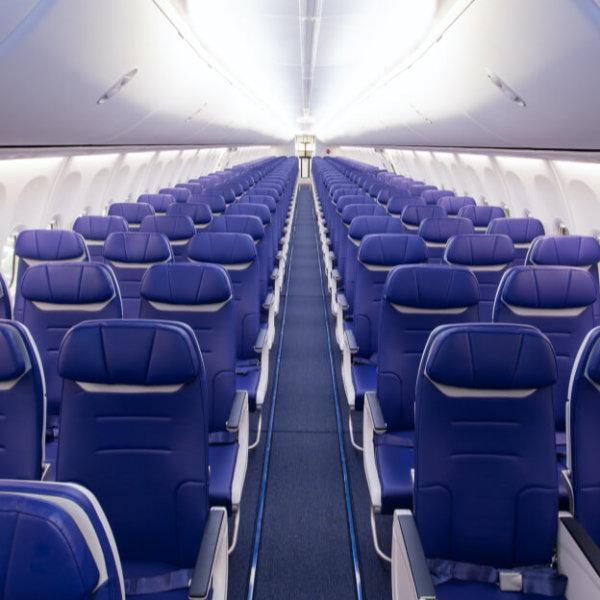
First-time Southwest Airlines Customers in the 1970s were welcomed on board with a unique proposition: self-serve, open seating. Your reservation confirmed a seat on the plane . . . you just never knew which one. Some Hostesses (now called Flight Attendants) would quip, “It’s open seating. You can sit anywhere you want—just like at church.”
Most other commercial airlines were assigning seats and experimenting with cabin layouts that gave them the opportunity to create more cabin classes and more fare structures. But Southwest kept it simple. Low fares gave everyone a chance to travel.
First-class cabins were nonexistent at Southwest. Nobody had priority in boarding: The first person in line was the first person on the plane. The people sitting up front weren’t enjoying gourmet meals and champagne. Everyone had the same snack and drink choices.
The Company’s egalitarian operating philosophy was driven largely by Founder Herb Kelleher, who deplored the class mentality and treated everyone he met as an equal, whether it was a Supreme Court justice or a hotel concierge. Titles and positions meant little to Herb, who had a reputation for making himself just as available to Mechanics and Reservations Agents as to the Board of Directors. Even when conventional wisdom suggested the airline could make more money by offering first-class tickets, Herb let his values and passion for fairness drive business decisions. “Conventional wisdom put a hell of a lot of airlines out of business,” he said.
The open-seating policy has been a Southwest hallmark since its first flight, and the benefits were immediately clear. Numerous studies showed that open seating enabled Southwest to get Customers on planes more quickly and efficiently than its competitors. Faster boarding meant more on-time departures, and cost savings that led to lower ticket prices.
Customers—even Southwest’s most devoted fans—developed a love-hate relationship over the years. They loved the low-cost flights but hated the thought of being stuck in a middle seat if they got stuck in a traffic jam on the way to the airport.
In 2006, Southwest toyed with the idea of abandoning open seating. It tested assigned seating on 200 flights out of San Diego and repeated the experiment in San Antonio. The airline surveyed Customers, including frequent fliers, and the outcome of the “great seating experiment,” said CEO Gary Kelly, was clear: Customers like having the freedom to choose their own seats. And if Customer preference wasn’t convincing enough to keep open seating alive at Southwest, the efficiency factor sealed the deal. The tests proved that assigned seating increased boarding time by one to four minutes.
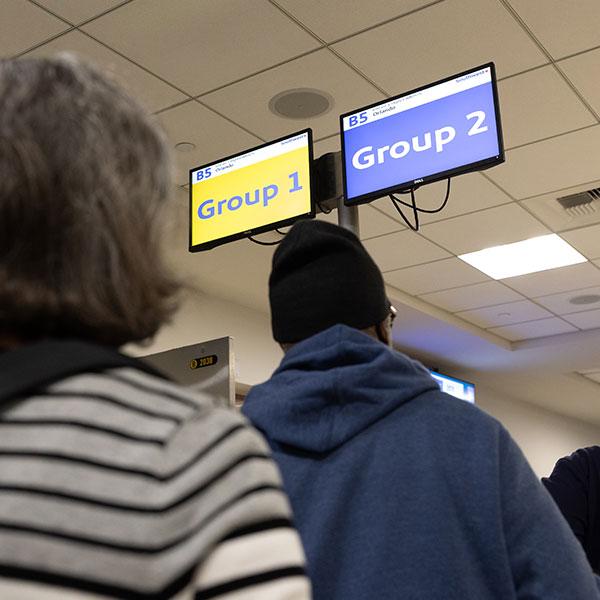
Although open seating remained, Customer feedback pointed to frustrations that warranted some big changes. By 2007, Southwest had said goodbye to the first-come, first-served boarding approach and eliminated the need for Customers to camp out at the gate for a shot at a coveted aisle or window seat. Instead, it assigned letter and number combinations that were printed on boarding passes. When an Operations Agent called a boarding group by letter, Customers took their place in line, in numerical order.
As consumer expectations continued to evolve, so did Southwest’s perspective on the importance of aligning its operation and service offerings to meet the changing demands of the industry. Every aspect of the business came under review, including open seating. What began as an ingenious approach to operational efficiency—serving the business well for decades—eventually gave way to advancements in technology, self-service options, and consumer preference for more control over their travel experience. In 2026, Southwest introduced its own design for custom fare offerings, assigning seats and group-based boarding, all while continuing to embrace its organizational roots of simplicity, efficiency, and leading with Heart.